Missing Ingredient Finally Reveals How Galaxies Formed at The Dawn of Time
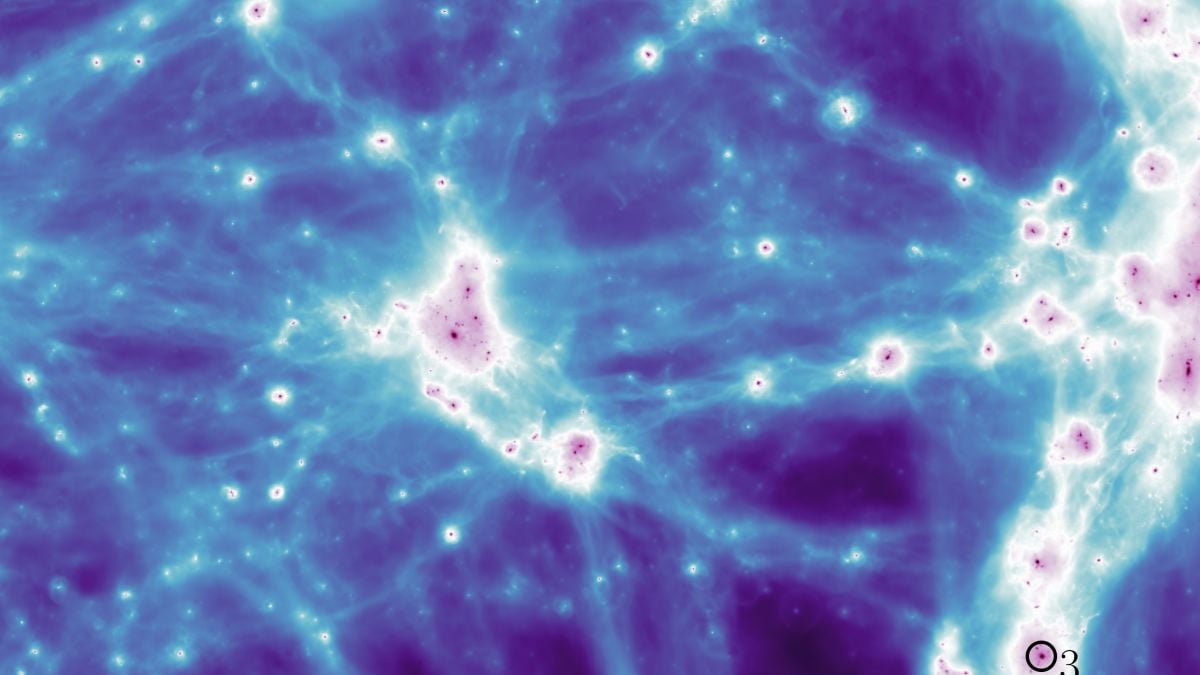
New Simulation Unlocks Secrets of Early Galaxy Formation
In a stunning scientific breakthrough, astronomers have discovered the crucial element needed to understand how the first galaxies formed in the dark expanse left by the Big Bang. This captivating development not only enriches our comprehension of cosmic dawn but also challenges earlier scientific assumptions.
The Breaking Point
In the primordial chaos that followed the Big Bang, the Universe was a turbulent mix of plasma. As the cosmos cooled and elements coalesced, scientists have long wondered how this alchemical transformation led to the formation of galaxies as we see them today.
Beneath the Surface
Powered by the COLIBRE cosmological simulation, researchers have successfully included detailed models of cold, dusty gas and the star-driven forces that sculpted the early Universe. This intricate modeling revealed that even the massive galaxies glimpsed by the James Webb Space Telescope can be explained under current cosmic models when simulations account for these new factors.
The Ripple Effect
This research brings us one step closer to replicating a Universe that mirrors our own, and highlights the mysteries, such as the mysterious "Little Red Dots," that still beg to be unraveled. As astronomers continue to probe the cryptic beginnings of cosmic history, these insights provide a guiding light in uncovering the intricate tapestry of galaxy formation.
"It is exhilarating to see 'galaxies' come out of our computer that look indistinguishable from the real thing," enthuses physicist Carlos Frenk, reflecting the power of theoretical modeling.
Physicist Carlos Frenk, Durham University